DRG Auto · ECU repair New Zealand

ECU Repair New in Zealand

Send-in ECU / ECM repair for mechanics, auto electricians, workshops, fleet operators and vehicle owners across New Zealand.

DRG Auto focuses on the engine computer itself: board inspection, power and communication faults, corrosion, damaged tracks, failed components and practical repair assessment. If the vehicle-side diagnosis points toward the ECU, send the module to us for bench assessment.

ECU / ECM Repair - No Communication Faults - No Start Faults - Board-Level Inspection

What ECU Repair Means

ECU repair means assessing the original engine control unit instead of automatically replacing it. Where practical, we repair the electronics inside the module so the original coding, VIN matching and immobiliser compatibility are more likely to be preserved.

What We Look For Inside the ECU

  • Corrosion, water damage and board contamination
  • Leaking capacitors and damaged copper tracks
  • Failed power components, drivers and protection parts
  • Cracked solder joints and connector damage
  • CAN, LIN and other communication circuit faults
  • Signs of previous repair attempts or heat damage
Why the Original ECU Matters

Replacing an ECU is not always simple. Used or new modules may need coding, immobiliser matching, VIN programming or software work before the vehicle will run correctly.

If the original ECU is repairable, it may avoid extra programming work and reduce vehicle downtime.

How ECU Testing Works at a High Level

ECU testing is not one single test. Different ECUs need different strategies depending on the fault, vehicle network, immobiliser system and how much of the vehicle environment the ECU expects to see.

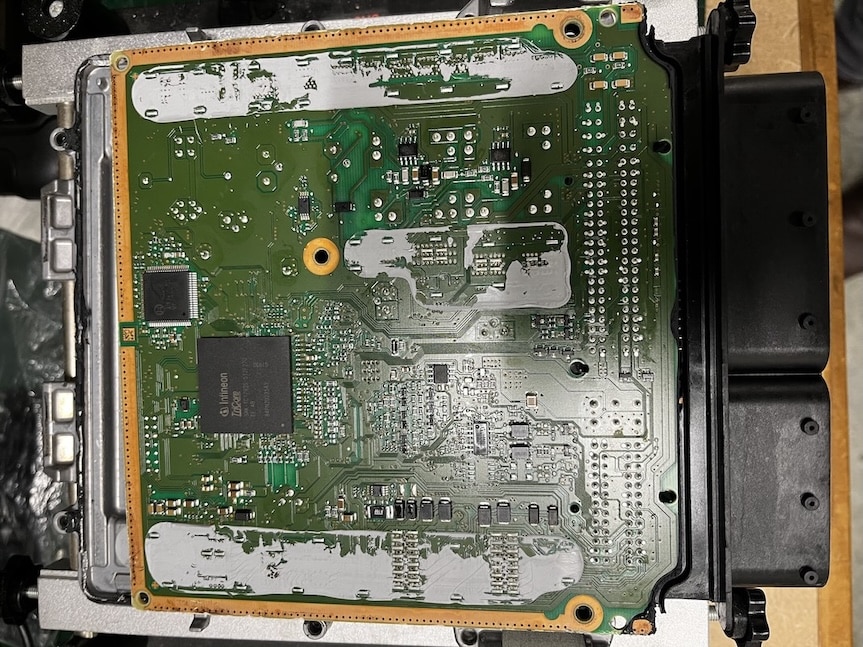
Internal circuit board view of an automotive ECU during inspection

1. Visual and Board Inspection

The first useful test is often visual. Once the ECU is opened, we inspect the board for obvious damage before spending time on deeper electronic testing.

  • Burn marks or overheated areas
  • Corrosion around pins and ICs
  • Leaking capacitors
  • Damaged tracks, vias and pads
  • Connector damage or previous repair work
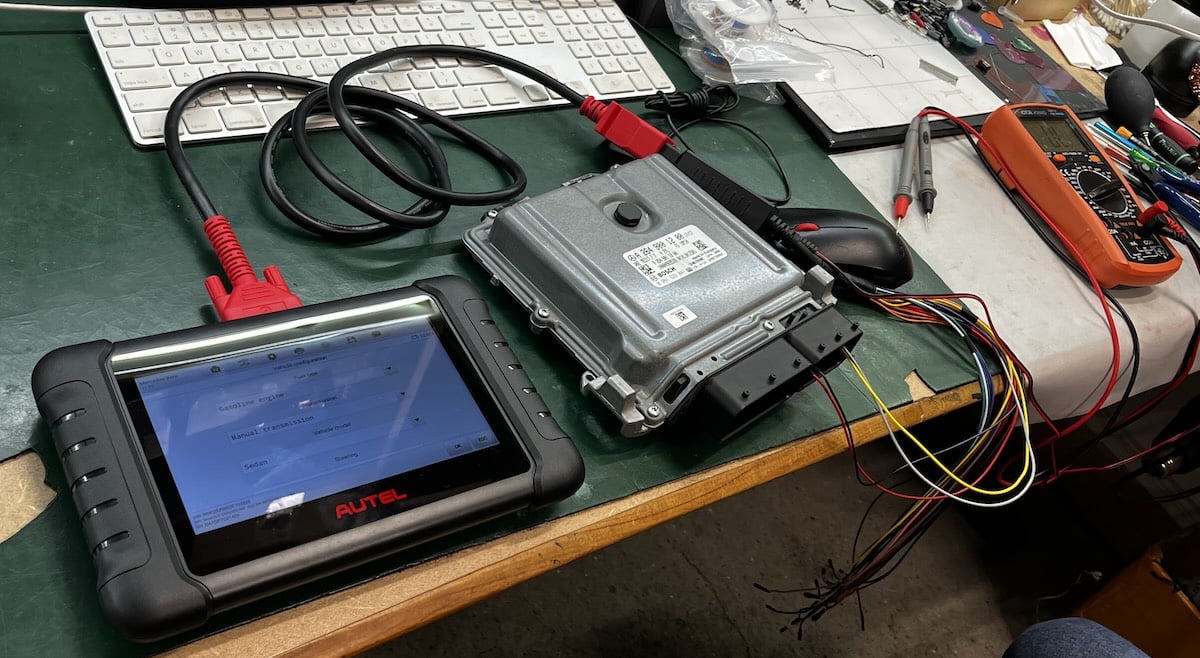
ECU connected on the bench for power-up and current behaviour checks

2. Power-Up and Current Behaviour

A controlled bench power-up can show whether the ECU has a short, abnormal current draw, missing power rail or internal supply issue.

  • Stable bench supply
  • Current-limited first power-up
  • Battery feed, ignition feed and grounds
  • Internal power rails and short checks
  • Safe shutdown if the module behaves abnormally
ECU communication testing and repair in progress at DRG Auto

3. Communication Testing

Many ECUs can be checked for basic communication on the bench. A USB-CAN interface, scan tool or diagnostic setup may help confirm whether the ECU wakes up and talks.

  • CAN-H and CAN-L communication checks
  • OBD or bench diagnostic access where possible
  • DTC read / clear where supported
  • Live data checks on compatible setups
  • Comparison against expected module behaviour
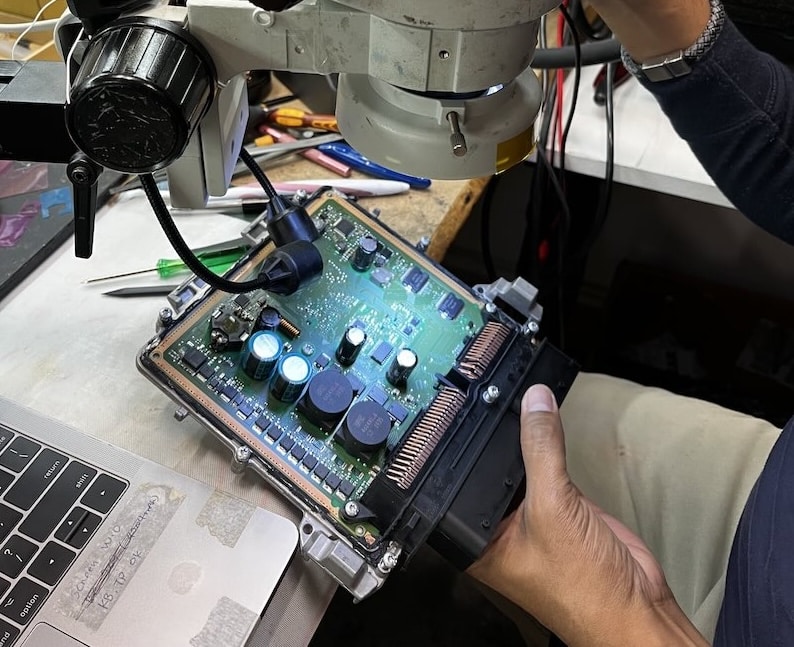
ECU circuit board inspected under microscope for vehicle-specific fault testing

4. Vehicle-Specific Simulation

Some ECUs need more than power and CAN wiring. They may expect signals from the BCM, gateway, immobiliser, sensors or other modules before they behave normally.

  • CAN message replay or simulation
  • Crank and cam signal simulation for some engine ECUs
  • Sensor and switch input simulation
  • Load testing for outputs where practical
  • Understanding when bench testing has limits

Different ECUs Need Different Testing

A diesel engine ECU, petrol ECU, transmission controller, body module or hybrid power unit may all speak over CAN, but they do not behave the same on the bench.

Engine ECU / ECM

Engine ECUs are often the most demanding to test fully because they may need crank, cam, throttle, sensor and immobiliser signals before all functions become active.

  • No communication and no start faults
  • Injector, ignition and sensor circuit faults
  • Power rail and ground faults
  • Immobiliser or security-related limitations

TCU / TCM

Transmission control modules often rely heavily on CAN communication and can be good candidates for bench communication checks and controlled investigation.

  • No communication faults
  • Limp mode electronics checks
  • Solenoid driver and power faults
  • CAN traffic and gateway-related symptoms

ABS / ESP Modules

ABS and stability modules may communicate on the bench, but some functions depend on vehicle inputs, wheel speed information, pump behaviour and internal module construction.

  • ABS warning light faults
  • Communication faults
  • Bond wire and hybrid circuit issues
  • Pump motor or solenoid-related symptoms

Hybrid / EV Control Modules

EPCU and hybrid / EV modules require extra care. These systems can involve high-voltage safety, complex handshakes and vehicle-specific communication that must be assessed case by case.

  • EPCU assessment through the correct intake path
  • Extra safety considerations
  • Vehicle-specific communication requirements
  • Repairability confirmed only after assessment

What Bench Testing Can and Cannot Prove

Bench testing is useful, but it does not replace vehicle-side diagnosis. The vehicle wiring, sensors, battery, alternator, fuses, relays, security modules and other control units can all affect the way an ECU behaves.

Bench Testing Can Help Confirm

  • Whether the ECU powers up safely
  • Whether the ECU communicates on the expected bus
  • Whether there is obvious internal board damage
  • Whether a power rail, driver or communication circuit has failed
  • Whether repair is practical enough to quote further work

Bench Testing May Not Fully Prove

  • Intermittent faults that only happen hot, cold or under vibration
  • Faults caused by vehicle wiring or sensor issues
  • Immobiliser handshakes or gateway behaviour
  • Full engine operation without crank, cam and load simulation
  • All brand-specific routines or protected software functions

ECU Repair Examples From the Workshop

These examples show the kind of evidence we look for: visible board damage, failed communication lines, component-level faults and practical repair limits.

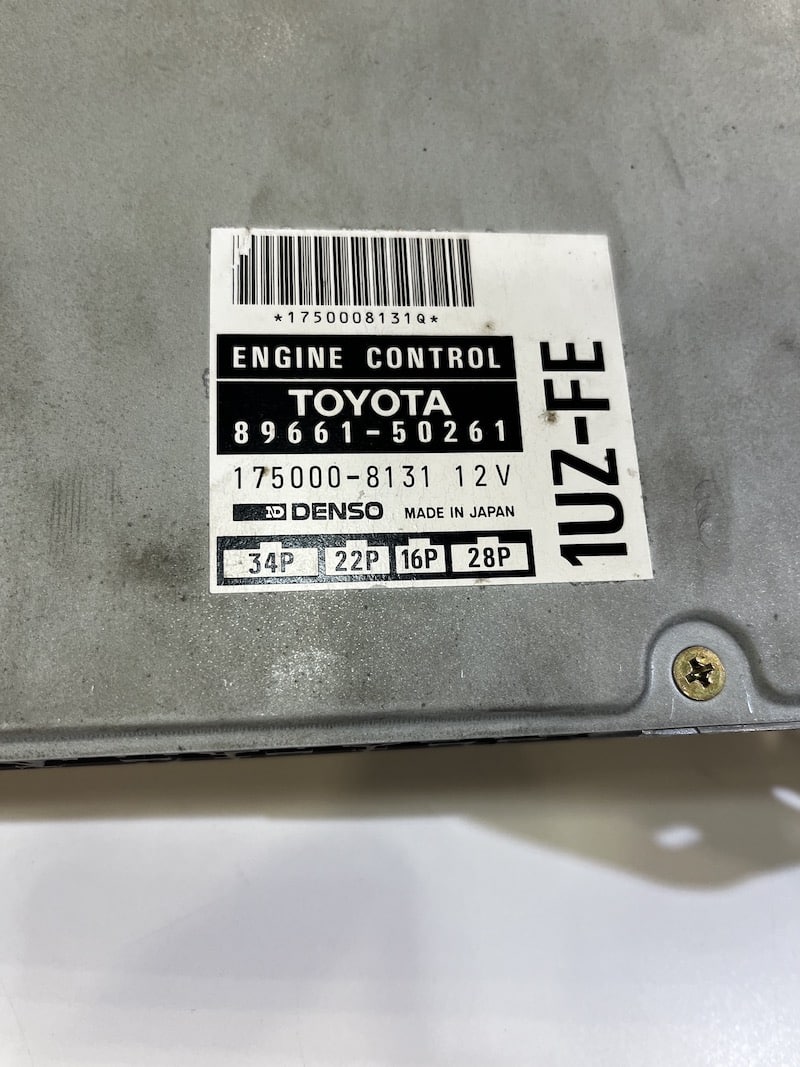
Toyota Denso 1UZ-FE ECU repaired by DRG Auto

Toyota Denso 1UZ-FE ECU Repair

A common ECU repair example involving leaking electrolytic capacitors, board contamination, damaged tracks and unstable signal paths.

ECU connected for bench testing at Device Repair Guy

Bench Communication Checks

Bench setups can help confirm whether a module powers up, communicates and responds to diagnostic tools, while still respecting the limits of off-vehicle testing.

ECU circuit board under microscope during repair

Microscope Inspection

Magnification is useful for checking fine solder joints, corrosion around ICs, damaged pads, lifted tracks and small components that cannot be assessed properly by eye.

When an ECU Is a Good Repair Candidate

The best ECU repair jobs arrive with clear fault evidence and a module that is still physically suitable for repair.

Good Diagnostic Evidence

Scan-tool data, voltage checks, fault codes and workshop notes point toward the ECU rather than a sensor, wiring, fuse, relay or battery issue.

Original Module Still Present

Repairing the original ECU may preserve immobiliser, VIN and configuration information if the module can be recovered.

Replacement Is Expensive or Difficult

Repair may be worth investigating when replacement modules are unavailable, expensive, back-ordered or likely to create coding delays.

Damage Appears Repairable

Modules with localised corrosion, failed components, damaged tracks or known failure patterns are often better candidates than units with severe fire, water or physical damage.

Send ECU Modules to DRG Auto From Anywhere in New Zealand

DRG Auto accepts send-in ECU repairs from around New Zealand. Complete the intake form first so your contact details, vehicle details and fault notes arrive with the module.

What to Include With the ECU

  • Completed intake form
  • Vehicle make, model, year and engine
  • ECU part number and photos of labels
  • All DTCs and whether they are active or stored
  • Symptoms and when they occur
  • Battery, charging, fuse, relay and ground checks where available
  • Your return address and courier details

ECU Repair FAQs

Do you repair ECU and ECM modules across New Zealand?

Yes. DRG Auto inspects and repairs many ECU and ECM modules sent in from around New Zealand. We focus on module-level faults such as no communication, power faults, corrosion, failed components and damaged board tracks.

Do you need the whole vehicle?

Usually no. In most cases, mechanics and auto electricians remove the ECU and send the module to us with diagnostic notes and the completed intake form.

Can bench testing prove every ECU fault?

No. Bench testing is useful for power, communication and board-level checks, but some faults only appear in the vehicle under heat, vibration, load, immobiliser conditions or with other modules present.

Should a mechanic or auto electrician complete the intake form?

Ideally, yes. The intake form asks for diagnostic evidence such as fault codes, voltage readings, vehicle-side checks and symptoms that are most useful when completed by the technician who tested the vehicle.

Can every ECU be repaired?

No. Some ECUs are sealed, badly burnt, data-corrupt, water damaged beyond practical repair or affected by vehicle-side faults outside the module. We assess repairability before proceeding where possible.

Ready to Send an ECU for Assessment?

Start with the intake form. Clear diagnostic information helps us decide whether the ECU is a good repair candidate and what testing strategy makes sense.

Start the ECU Repair Process View Workshop Posts

Scroll to Top